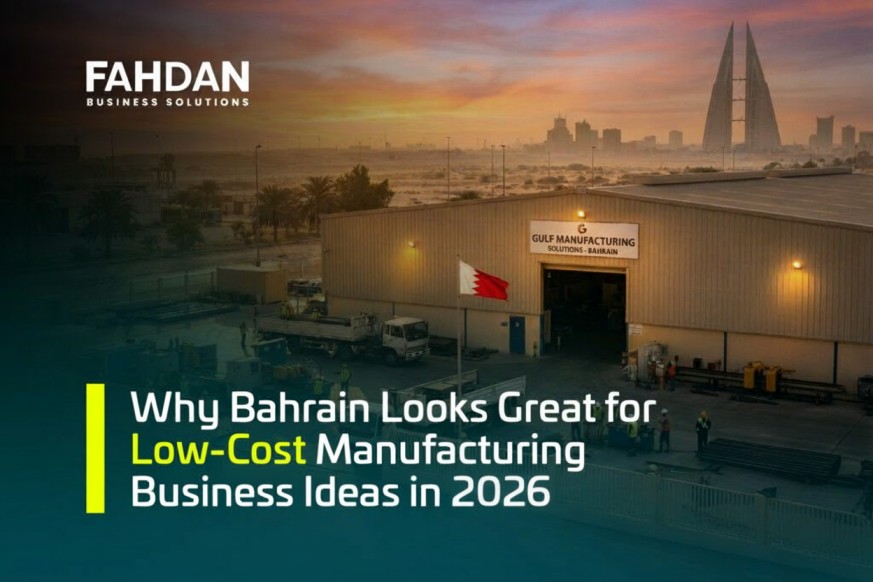
For someone who has an aim of starting a small-scale manufacturing unit in the Gulf, Bahrain can be one of the most welcoming places, especially if they want low startup costs, flexibility, and easy foreign ownership. There are multiple things in this case that work in their
favour. Like 100% foreign ownership (in many business structures), zero corporate or personal income tax (apart from VAT), and a straightforward registration/licensing process through the digital registry portal (Sijilat).
To top it off, Bahrain also gives you access to GCC-wide markets (especially with proximity to Saudi Arabia), and has multiple industrial zones and affordable warehouses, which is actually a big plus for small manufacturers. With this setup, you don’t need millions to start
something meaningful. A modest investment that is much lower than you think can work for you.
10 Promising Low-Cost Manufacturing Ideas (Small Investment,
Real Demand)
Presented below are ten small-scale manufacturing business ideas that are viable in Bahrain in 2026 (budget-friendly edition).
What to consider before starting out is putting focus on one product line instead of spreading yourself thin. Once that’s stable, scale or diversify.
Getting Set Up: What You Need to Know Before Starting
If you decide to launch any of those small-scale ideas, here is an estimate of the setup costs and structure in Bahrain (as of 2026).
1. Legal structure: The most common route is a “With Limited Liability” (WLL) company, which currently allows 100% foreign ownership (depending on the activity).
2. Choose correct activity code: While registering via Sijilat, pick the code that matches the manufacturing/assembly work you plan to do (detergents, snack-making, packaging, etc.).
3. Industrial address or workspace: Initially some zoning-friendly light-industrial or small-unit spaces work, but for licensed manufacturing you’ll need a proper industrial-zone address (e.g. light-industrial park, small warehouse, etc.).
4. Regulatory & municipal approvals: For food, chemicals, textile or hygiene-related products, you’ll need compliance for safety, waste disposal and local environmental/municipal clearance.
5. Register officially: Submit necessary documents such as Memorandum of Association, activity list, owner/partner IDs, lease/address proof, etc. Once approved, you can hire staff (if needed), register for VAT (if applicable), and start operations.
Typical Startup Costs (approximate range)
Here is roughly what you should budget for when starting out:
● Company registration & formalities: ~ 1,340 – 2,150 BHD
● Renting workspace/industrial unit: ~ 200 – 600 BHD/month
● Machinery/equipment (small scale): ~ 1,500 – 8,000 BHD
● Initial raw materials: ~ 500 – 2,000 BHD
● Licences/inspections/approvals: ~ 250 – 600 BHD
● Basic packaging, marketing & launch expenses: ~ 200 – 500 BHD
So total initial cost can sometimes stay under ~ 4,000 – 6,000 BHD for smaller ideas and for slightly larger operations, it can go up to ~ 13,000 – 14,000 BHD.
Where to Base Your Manufacturing Unit
If you want good infrastructure and reasonable costs along with a setup that lets you distribute easily, check out Bahrain’s light-industrial zones. Some names worth noting are:
● Bahrain International Investment Park (BIIP) – Good for small-to-mid manufacturing setups.
● Sitra Industrial Area – Another option for light manufacturing or small-units.
● Bahrain Logistics Zone (BLZ) – Useful if you want warehousing, ease of logistics, and exports.
● Askar Light Industrial Area – For smaller scale, flexible industrial-setup needs.
These zones offer logistical advantages (ports, export routes), regulated compliance structures, and flexibility, which are all helpful if you plan to scale up later.
How You Could Sell or Distribute Products
Once production is ready, there are several distribution channels that work in the present market:
● Local grocery stores, small shops or retail stores (For food, snacks, household products).
● Wholesale distributors serving restaurants, hotels, supermarkets (For packaging, cleaning supplies, food, etc.).
● Online marketplaces (regional e-commerce platforms), or social-commerce via Instagram / social media (For lifestyle items: candles, modest fashion, personal-care, natural-products.
● Export to other GCC countries as Bahrain’s location plus trade ties give a logistical edge (For food, hygiene, & eco-friendly products).
Some Honest Advice Before You Jump In
● Don’t try to do everything at once. Focus on one product type and get that right before you expand.
● Presentation and packaging matter more than you think, especially in markets where eco-conscious and quality-conscious buyers exist.
● Aim for certifications or labels (e.g. eco-friendly, halal, quality-certified), if you want to expand to other GCC countries.
● Be ready for compliance and regulatory checks if you deal with food, cosmetics, hygiene products and also make sure you follow local standards strictly.
● Use the connectivity advantage very well. Local manufacturing and regional reach can help but you’ll need good logistics and supply-chain planning to make it work.
This approach is realistic because you don’t need a big factory or huge capital but just a clear idea, a small budget, and smart positioning. It can be as simple as eco-soaps, or something a bit more involved like modest fashion or small-batch beverages and there’s still space for a small player to carve a niche.